
(To see other currencies, click on price)
MORE ABOUT THIS BOOK
Main description:
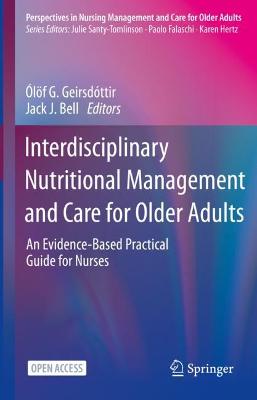
This open access book aims to primarily support nurses as leaders and champions of multimodal, Interdisciplinary nutrition care for older adults. A structured approach to fundamentals of nutrition care across Interdisciplinary settings is combined with additional short chapters about special topics in geriatric nutrition. The book is designed to provide highly accessible information on evidence-based management and care for older adults, with a focus on practical guidance and advice across acute, rehabilitation, and primary and secondary malnutrition prevention settings.The cost of malnutrition in England alone has been estimated to be GBP19.6 billion per year, or more than 15% of the total public expenditure on health and social care. ^65 years. The importance and benefit of specialised nutrition care, delivered by experts in field, is well established for those with complex nutrition care needs. However, despite the substantial adverse impact of malnutrition on patient and healthcare outcomes, specialised management of this condition is often under-resourced, overlooked and under-prioritised by both older adults and their treating teams.
As an alternative, timely, efficient, and effective supportive nutrition care opportunities may be appropriately implemented by nurses and non-specialist Interdisciplinary healthcare team members, working together with nutrition specialists and the older adults they care for. Practical, low-risk opportunities should be considered across nutrition screening, assessment, intervention, and monitoring domains for many patients with, or at risk of malnutrition. Whilst a variety of team members may contribute to supportive nutrition care, the nursing profession provide a clear focal point. Nurses across diverse settings provide the backbone for Interdisciplinary teamwork and essential patient care. The nursing profession should consequently be considered best placed to administer Interdisciplinary, multimodal nutrition care, wherever specialist nutrition care referrals are unlikely to add value or are simply not available. As such, the book is a valuable resource for all healthcare providers dedicated to working with older patients to improve nutrition care.
Contents:
Foreword from FFN
Professor Paolo Falaschi, Italy
Julie Santy-Tomlinson, United Kingdom
Karen Hertz, United Kingdom
Part I
Chapter 1: Overview of nutrition care in geriatrics and orthogeriatrics
Setting the scene/awareness
Description of issues/common nutritional problems, including prevalence, causes, consequences, costs
Guidelines /consensus on nutritional care
Description of geriatric patients and patients with fragility fractures including prevalence, causes, consequences, costs
Nutritional requirements in old age and in fragility fractures
Why proactive, multimodal, and multidisciplinary nutrition care is a 'must do'
Need to focus on nutrition care across the 3 pillars: acute care, rehabilitation, and primary/secondary prevention in the community
Shifting the focus of nutrition care with the onset of geriatric conditions, need to shift nutritional care focus from lifestyle disease and obesity prevention to prevention of functional loss and maintain muscle mass, bone integrity, and optimal quality of life. Food choose in heart disease, risk of malnutrition vs heart health & food chooses in diabetes and serum glucose control
Antony Johansen, Jack Bell, Australia, Julie Santy Tomlinson, United Kingdom, Karen Hertz, United Kingdom, Oloef Gudny Geirsdottir, Iceland
Chapter 2: Nutritional requirements in geriatrics
Anne Marie Beck (Dietitian), Denmark, Mette Holst (Nurse), Denmark,
Key words: nutritional recommendations, change in requirements with age and disease, any specific nuances for orthogeriatrics
Chapter 3: Nutritional assessment, diagnosis and treatment in geriatrics
Anne Marie Beck (Dietitian), Denmark, Mette Holst (Nurse), Denmark
Key words: definitions, assessment, diagnosis and treatment for nutritional problems i.e. malnutrition other problems? Targeting nutritional/dietetic care process principles (including screening, assessment, diagnosis, intervention, monitoring)
Chapter 4: Best practice in nursing care; role of nutrition
Anita Meehan (Nurse), USA, Satya Jonnalagadda (Dietitian)
Key words: safety, timeliness, effectiveness, efficiency, efficacy and patient-centred geriatric care
Chapter 5: Hydration in orthogeriatrics
Sigrun Sunna Skuladottir (Nurse), Iceland, Vilborg Kolbrun Vilmundardottir (clinical nutritionist), Iceland
Key word: recommendations, hydration balance, best practise at the ward
Chapter 6: Untangling aging, malnutrition, frailty, sarcopenia and function decline
Silvia Migliaccio, (Endocrinology), Italy, Lorenzo M Donini, Italy
Key words: definitions, association of malnutrition with frailty, sarcopenia and physical function, falls
Chapter 7: Bone health, fragility and fractures (5000 words)
Helen Wilson, (geriatrician) & co-worker UK
Key words: definitions, association of nutrition with bone health
Chapter 8: How to increase patient motivation and adherence to nutritional care? Overcoming psychological barriers
Stephano Eleuteri, Italy, Maria Eduarda Batista de Lima, Italy
Chapter 9: How to engage treating teams to spread and sustain nutritional care
Celia Laur, Australia, Jack Bell, Australia
Keywords: Embedding, sustaining and spreading nutrition care improvements, SIMPLE model. This should also take into account where nutrition care may best be delivered e.g. community setting vs acute hospitals and the potential role for community based / aged care home-based nurses to be leaders and champions in this space
Chapter 10: Interdisciplinary team and education of professionals
Julie Santy-Tomlinson, United Kingdom, Karen Hertz, United Kingdom
Key words: Importance of interdisciplinary teamwork and interdisciplinary education
PART II Special topics in geriatric nutrition (1000 words)
Chapter 11: Specialist versus generalist nutritional care in aging
Oloef Gudny Geirsdottir, Iceland, Jack Bell, Australia
This introduces a "less is more" approach in geriatric nutrition to deliver nutritional care that matters for the patients. Dietary deprescription; working with the whole patient rather than treating specific disease processes; balancing food as a medicine with food for comfort; how to apply codesign, shared decision making, and truth telling.
Chapter 12: Key opportunities for multidisciplinary nutritional care
Debbie ten Cate / Roelof Ettema, Chrys Pulle / Antony Johansen, Alita Rushton (AU)
Enteral- and parenteral nutrition, supplemental drinks, mealtime assistance, nutritional education etc
Chapter 13: Physical activity, exercise and physical rehabilitation
Monica Rodrigues Perracini, Brasilia
Nutrition and PA and safe PA for old adults
Chapter 14: Pressure ulcer prevention and management
Julie Santy-Tomlinson, United Kingdom, Karen Hertz, United Kingdom
Nutrition, nutritional status and pressure ulcer
Chapter 15: Obesity, Body composition & BMI
Sari Holmstein, Finland, Alfons Ramel, Austria/Iceland
Obesity paradox in aging
Chapter 16: Fundamentals of nutritional physiology
Saverio Cinti, Italy
Anatomy and physiology of nutritional system overview with a basic overview of the different roles of macro and micronutrients in orthogeriatric
Chapter 17: Nutrition in oropharyngeal dysphagia
Lina Spigiene, Lithuania, Gyte Damuleviciene, Lithuania
Chapter 18 Delirium
Lina Spigiene, Lithuania, Alison Mudge, Australia
Prevention of delirium and risk of malnutrition in delirium
Chapter 19: Drug-food & food-drug interaction - supplements
THorhallur Ingi Halldorsson, Iceland, Bjoern Vidar Adalbjoernsson, Iceland, Alfons Ramel, Iceland
Risk of interactions, supplements bioavailability
Chapter 20: Food services and systems
Sandra Capra, Mary-Hannan Jones
Nutritional care out of the ward
Chapter 21: End of life, food and water - ethical standards of care
Stephano Eleuteri, Italy
Food is not only energy and nutrients; food has both social and mental affects. Balancing the need for 'food as medicine' with food for comfort, especially when the focus of treatment intent changes from rehabilitation to comfort cares / palliation.
PRODUCT DETAILS
Publisher: Springer (Springer Nature Switzerland AG)
Publication date: September, 2021
Pages: None
Weight: 651g
Availability: Available
Subcategories: Biochemistry, Nursing, Nutrition