
(To see other currencies, click on price)
MORE ABOUT THIS BOOK
Main description:
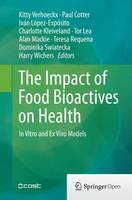
"Infogest" (Improving Health Properties of Food by Sharing our Knowledge on the Digestive Process) is an EU COST action/network in the domain of Food and Agriculture that will last for 4 years from April 4, 2011. Infogest aims at building an open international network of institutes undertaking multidisciplinary basic research on food digestion gathering scientists from different origins (food scientists, gut physiologists, nutritionists...). The network gathers 70 partners from academia, corresponding to a total of 29 countries. The three main scientific goals are: Identify the beneficial food components released in the gut during digestion; Support the effect of beneficial food components on human health; Promote harmonization of currently used digestion models Infogest meetings highlighted the need for a publication that would provide researchers with an insight into the advantages and disadvantages associated with the use of respective in vitro and ex vivo assays to evaluate the effects of foods and food bioactives on health. Such assays are particularly important in situations where a large number of foods/bioactives need to be screened rapidly and in a cost effective manner in order to ultimately identify lead foods/bioactives that can be the subject of in vivo assays. The book is an asset to researchers wishing to study the health benefits of their foods and food bioactives of interest and highlights which in vitro/ex vivo assays are of greatest relevance to their goals, what sort of outputs/data can be generated and, as noted above, highlight the strengths and weaknesses of the various assays. It is also an important resource for undergraduate students in the 'food and health' arena.
Contents:
0.2 Introduction
Paul Cotter and Kitty Verhoeckx
1.0 Gastrointestinal digestion models, general introduction
Alan Mackie
1.1.0 Static digestion models general introduction
Antonio Cilla
1.1.1 InfoGest consensus method
Alan Mackie
1.1.2 Approaches to static digestion models
Alan Mackie
1.2.0 Dynamic digestion models general introduction
Eva Theunemann
1.2.1 The TNO gastro-Intestinal Model (TIM)
Mans Minekus
1.2.2 Dynamic Gastric Model (DGM)
Eva Thuenemann
1.2.3 Human Gastric Simulator (Riddet model)
Paul Singh
1.2.4 The DIDGI (R) System
Didier Dupont
2.0 General introduction to cells, cell lines and cell culture
Tor Lea
2.1.0 Epithelial cell models; General introduction
Tor Lea / Charlotte Kleiveland
2.1.1 Caco-2 cell line
Tor Lea
2.1.2 HT29 cell line
Isidra Recio
2.1.3 The IPEC-J2 cell line
Hans Vergauwen (Gent)
2.1.4 Co-cultivation of Caco-2 and HT-29MT
Charlotte Kleiveland
2.2 Innate and adaptive immune cells; General introduction
Ivan Lopez Exposito
2.2.1 THP-1 and U937 cells
Harry Wichers
2.2.2 Peripheral blood mononuclear cells
Charlotte Kleiveland
2.2.3 PBMC-derived T cells
Ivan Lopez Exposito
2.2.4 Dendritic Cells
Maud Plantinga
2.2.5 Co-culture Caco-2/ immune cells
Charlotte Kleiveland
2.3 Enteroendocrine Cell Models: General introduction
Linda Giblin
2.3.1 STC-1 cells
Linda Giblin (Teagasc)
2.3.2 NCI-H716 cells
Jeffrey Gagnon & Patricia Brubaker
2.3.3 Murine GLUTag cells
Patricia Brubaker
3.0 In vitro intestinal tissue models: General introduction
Kitty Verhoeckx
3.1 Intestinal crypt organoids as experimental models
Sabina Lukovac
3.2 Porcine ex vivo intestinal segment model
Dina Ripken
3.3 Ussing chamber
Joost Westerhout
4.0 In vitro fermentation models: General Introduction
Dominika Swiatecka and Teresa Requena
4.1 One compartment fermentation model
Anna-Marja Aura
4.2 The TNO in vitro model of the colon - TIM-2
Koen Venema
4.3 The Simulator of the Human Intestinal Microbial Ecosystem - SHIME (R)
Tom van de Wiele
4.4 The computer-controlled multicompartmental dynamic model of the gastrointestinal system SIMGI
Teresa Requena
PRODUCT DETAILS
Publisher: Springer (Springer International Publishing AG)
Publication date: October, 2016
Pages: 355
Weight: 6035g
Availability: Available
Subcategories: Physiology