
(To see other currencies, click on price)
MORE ABOUT THIS BOOK
Main description:
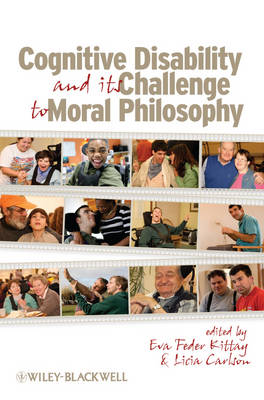
Through a series of essays contributed by clinicians, medical historians, and prominent moral philosophers, Cognitive Disability and Its Challenge to Moral Philosophy addresses the ethical, bio-ethical, epistemological, historical, and meta-philosophical questions raised by cognitive disability * Features essays by a prominent clinicians and medical historians of cognitive disability, and prominent contemporary philosophers such as Ian Hacking, Martha Nussbaum, and Peter Singer * Represents the first collection that brings together philosophical discussions of Alzheimer's disease, intellectual/developmental disabilities, and autism under the rubric of cognitive disability * Offers insights into categories like Alzheimer's, mental retardation, and autism, as well as issues such as care, personhood, justice, agency, and responsibility
Contents:
Notes on Contributors. 1. Introduction: Rethinking Philosophical Presumptions in Light of Cognitive Disability (Licia Carlson and Eva Feder Kittay). Part 1: Intellectual Disability: The Medical Model and Beyond 2. The Limits of the Medical Model: Historical Epidemiology of Intellectual Disability in the United States (Jeffrey P. Brosco). 3. Developmental Perspective on the Emergence of Moral Personhood (James C. Harris). Part 2: Justice 4. The Capabilities of People with Cognitive Disabilities (Martha Nussbaum). 5. Equality, Freedom, and/or Justice for All: A Response to Martha Nussbaum (Michael Berube). 6. Respecting Human Dignity: Contract Versus Capabilities (Cynthia A. Stark). 7. Duties of Justice to Citizens with Cognitive Disabilities (Sophia Isako Wong). Part 3: Care 8. Cognitive Disability in a Society of Equals (Jonathan Wolff). 9. Holding One Another (Well, Wrongly, Clumsily) in a Time of Dementia (Hilde Lindemann). 10. Agency and Moral Relationship in Dementia (Bruce Jennings). Part 4: Agency 11. Cognitive Disability, Paternalism, and the Global Burden of Disease (Daniel Wikler). 12. Responsibility, Agency, and Cognitive Disability (David Shoemaker). 13. Alzheimer s Disease and Socially Extended Mentation (James Lindemann Nelson). 14. Thinking About the Good: Reconfiguring Liberal Metaphysics (or Not) for People with Cognitive Disabilities (Anita Silvers and Leslie Pickering Francis). Part 5: Speaking About Cognitive Disability 15. How We Have Been Learning to Talk About Autism: A Role for Stories (Ian Hacking). 16. The Thought and Talk of Individuals with Autism: Reflections on Ian Hacking (Victoria Mcgeer). 17. The Entanglement of Race and Cognitive Disability (Anna Stubblefield). 18. Philosophers of Intellectual Disability: A Taxonomy (Licia Carlson). Part 6: Personhood 19. Speciesism and Moral Status (Peter Singer). 20. Cognitive Disability and Cognitive Enhancement (Jeff Mcmahan). 21. Caring and Full Moral Standing Redux (Agnieszka Jaworska). 22. The Personal Is Philosophical Is Political: A Philosopher and Mother of a Cognitively Disabled Person Sends Notes from the Battlefield (Eva Feder Kittay). Index.
PRODUCT DETAILS
Publisher: John Wiley & Sons Ltd (Wiley-Blackwell (an imprint of John Wiley & Sons Ltd))
Publication date: May, 2010
Pages: 440
Dimensions: 157.00 x 229.00 x 24.00
Weight: 623g
Availability: Available
Subcategories: Ethics, Neurology