
(To see other currencies, click on price)
MORE ABOUT THIS BOOK
Main description:
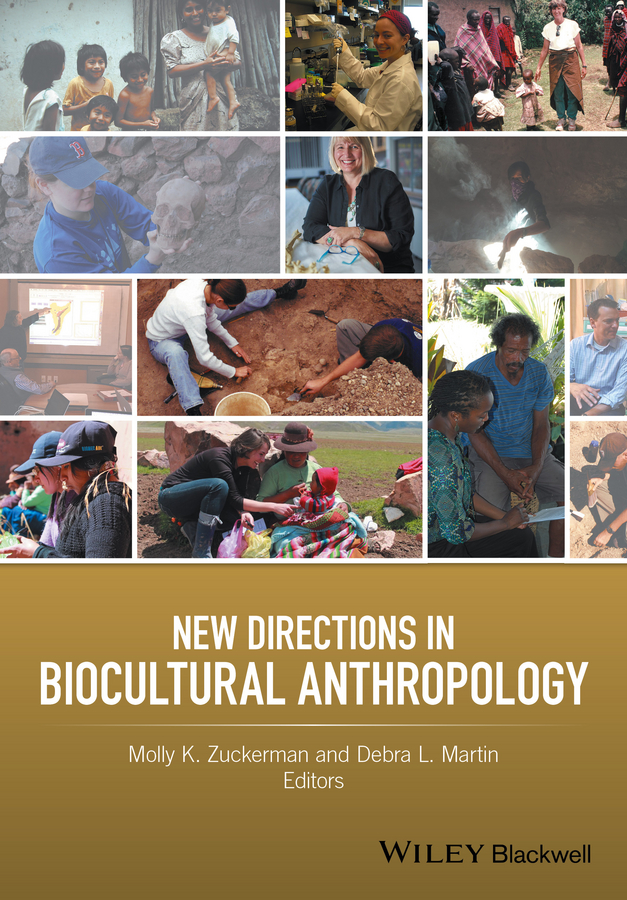
The proposed volume is a focused exploration of major areas of highly productive contemporary research in biocultural biological anthropology. Biocultural or biosocial anthropology is a research approach that views biology and culture as dialectically and inextricably intertwined, explicitly emphasizing the dynamic interaction between humans and their larger social, cultural, and physical environments. The biocultural approach emerged in anthropology in the 1960s, matured in the 1980s, and is now one of the dominant paradigms in anthropology, particularly within biological anthropology. The proposed volume gathers contributions from the top scholars in biocultural anthropology focusing on five of the most influential, productive, and important areas of research within biocultural anthropology. These topics are organized into five sections dealing with issues of race and racism; diet, nutrition and agriculture; bioarchaeology and ancient disease; reconstructions of social identity and gender, and the concept of epidemiologic transitions. Focusing on these five major areas of burgeoning research in biocultural anthropology makes the proposed volume timely, widely applicable and useful to scholars engaging in biocultural research and students interested in the biocultural approach, and synthetic in its coverage of contemporary scholarship in biocultural anthropology. Importantly, the text is focused on providing an understanding to students and scholars of where research and practice--theory, method, application, and data--in biocultural anthropology is right now and where the field is headed in the future. While texts promising to survey 'new directions' in research often suffer from too wide of a scope, lacking clear connections uniting the contributions beyond the aim of capturing their diversity, the contributors--and therefore the focus of the contributions--to this volume all have a fundamental, uniting theme: all of the authors were mentored or academically trained by one of the foremost scholars in the biocultural approach, George Armelagos. This volume was borne of an invited session at the American Association of Physical Anthropologists (in 2013) convened to honor George Armelagos's scholarship, mentorship, and tremendous influence in the field of biological anthropology and the discipline of anthropology. Armelagos is one of anthropology and biological anthropology's most preeminent contemporary scholars and has had one of the single greatest influences on scholarship in biological anthropology and biocultural anthropology in the late 20th century, particularly in regards to theoretical and methodological understandings of human variation and adaptation, nutrition, health, and disease[1]. His students and mentees, all trained in the biocultural approach, have become internationally known, leading scholars in anthropology and biological anthropology and have produced groundbreaking research that has greatly determined the state of current research in biological anthropology, biocultural anthropology, and the discipline of anthropology as a whole, as well as the trajectory that anthropological research will take in the future. The sections of the volume reflect topics that are major areas of contemporary research in anthropology, biological anthropology, and biocultural anthropology and, as a reflection of Armelagos's overarching influence on contemporary anthropological scholarship, topics that his research and intellectual legacy has greatly influenced. Because of Armelagos's strong biocultural perspective, his vision and his ability to inspire research that takes innovative turns, the proposed volume is structured as a "new directions in biocultural anthropology" reader. The proposed volume is not a festschrift or conference proceedings but would be structured as a reader, intended to support, influence, and guide both contemporary and future scholarship in anthropology, biological anthropology, and biocultural anthropology. To accomplish this, the proposed volume as primarily containing multiple short chapters (c. 5,000 words) organized into thematic sections that have a consistent structure: a discussion of theory and method relevant to a particular and then an application of these to an empirical case-study, supplemented by several chapters that provide focused literature reviews and explicit recommendations and best practice guidelines for future research. Contributions will consist of novel data and novel methods and theory or a revisiting of established data with novel theory and methods. Together, these themes would lend coherency across the volume, allow the volume to comprehensively address a set of topics, and explicitly demonstrate how theory and method can be applied to a diverse set of research questions and issues, informing contemporary scholarship and inspiring future work. In some ways, it would function as an update, revisiting, and revitalization of the issues raised by Goodman and Leatherman's The Biocultural Synthesis (University of Michigan Press, 1998), which has been very popular (but is now 15 years out of date). The proposed volume would be of interest to those teaching biological anthropology as well as to graduate students seeking out new ideas and fresh applications of anthropological data to today's pressing problems. It is being written flexibly enough that it could be used in advanced undergraduate classes as a reader in biocultural anthropology and applied anthropology. [1] This influence can be seen in the awards he has received recently: his selection in 2005 as a Viking Fund Medalist by the Wenner Gren Foundation, considered to be one of anthropology's highest honors; the Franz Boas Award for Exemplary Service to Anthropology from the American Anthropological Association in 2008; and the Charles Darwin Award for Lifetime Achievement to Biological Anthropology from the American Association of Physical Anthropologists in 2009.
Contents:
Chapters in the proposed text fall into five major categories, all within the biocultural perspective: (1) race and racism, (2) diet, nutrition and agriculture, (3) bioarchaeology and ancient disease, (4) social identity and gender, and (5) epidemiologic transitions. These categories reflect primary, highly productive foci of contemporary research within biocultural biological anthropology. They also represent five of the areas of research within biological anthropology where George Armelagos s scholarly contributions have had the greatest impact. 1. Introduction Introduction to the Volume. Molly K. Zuckerman and Debra L. Martin. (Tentative title) The Biocultural Approach and Four-Field Anthropology: A Force Against Future Fission. Peter Brown. 2. Race and Racism (Tentative title) Race is Real: It's Just that It Isn't What We Were Taught. Alan Goodman, Michael Blakey, and Joseph Jones. (Tentative title) Achieving Synthesis: New York s African Burial Ground and the Influences of Biocultural Anthropology. Michael Blakey and Leslie Rankin-Hill. (Tentative title) Race, Health, Biology: Biocultural Approaches. Christopher Kuzawa, Alan Goodman, George Armelagos. A History of Indigenous Caribbean Populations: Insights from Archeological, Ethnographic, Genetic and Historical Studies. Theodore G. Schurr, Jada Benn Torres, Miguel G. Vilar, and Jill B. Gaieski. 3. Diet, Nutrition and Agriculture The Myth of Protein Deficient Diets in Prehispanic Mexico. Rebecca Storey and Randolph J. Widmer, Unversity of Houston. Explorations in Paleodemography: An Overview of the Artificial Long House Valley Agent-Based Modeling Project, with New Observations on Demographic Estimation and Possible Disease Impacts. Alan C. Swedlund, Lisa Sattenspiel, Richard S. Meindl, Amy Warren, and George J. Gumerman. (Tentative title) Evolution, Ecology and Political Economy: Biocultural Perspectives on Nutrition and Disease. Thomas Leatherman, Alan Goodman, and R. Brooke Thomas. (Tentative title) Stable Isotopes and the Three Evolutionary Forces in Biomedical Anthropology. Christine D. White and Fred J. Longstaffe. 4. Bioarchaeology and Ancient Disease Broken Bodies and Broken Bones: A Biocultural Approached to the Origin and Evolution of Violence. Debra L. Martin Life and Death in 19th Century Peoria, Illinois: Taking a Biocultural Approach Towards Understanding the Past. Anne L. Grauer. Beyond the Differential Diagnosis: New Approaches to the Bioarchaeology of the Hittite Plague. Nicole E. Smith, Jerome C. Rose, Kathleen Kuckens. (Tentative title) Reconstructing Health and Disease in Ancient Egypt Brenda Baker (Tentative title) Wadi Halfa and Kulubnarti: 50 years in ancient Nubia. Dennis Van Gerven, Paul Sandberg, and George J. Armelagos. Paleoepidemiological approaches to ancient disease. Kristin N. Harper and Molly K. Zuckerman. 5. Social Identity and Gender (Tentative title) Searching for the Invisible People in the African Diaspora: Biocultural Perspectives. Leslie Rankin-Hill. (Tentative title) Violence, Politics, Identity: Biocultural Approaches. Ventura Perez. (Tentative title) Taking a closer look at the institutionalized: The late 19th century Colorado Insane Asylum. Ann Magennis. (Tentative title) Mobility, Violence, and the Formation of Identity in Ancient Peru. Bethany L. Turner and Haagen Klaus. (Tentative title) Age of Lead Exposure and Geographic Origins for Enslaved Individuals in 18th-Century New York: Quantitative Enamel-Lead Determination by Laser Ablation-Inductively Coupled Plasma-Mass Spectrometry (LA ICP-MS). Joseph Jones, Alan Goodman, Dula Amarasiriwardena, Michael Blakey, and Mark Mack. 6. Epidemiologic Transitions. From the Neolithic to the Nineties: The Human Determinants of Emerging Diseases. Ronald Barrett and George J. Armelagos. Population and Disease Transitions in the Aland Islands, Finland. Jacob T. Boyd and James H. Mielke The Second Epidemiologic Transition and the Hygiene Hypothesis: Using Evidence of Ancient Health to Inform Practice in Clinical Medicine and Public Health. Molly K. Zuckerman and George J. Armelagos.
PRODUCT DETAILS
Publisher: John Wiley & Sons Ltd (John Wiley & Sons Inc)
Publication date: October, 2016
Pages: 400
Weight: 666g
Availability: Not available (reason unspecified)
Subcategories: Public Health