
(To see other currencies, click on price)
MORE ABOUT THIS BOOK
Main description:
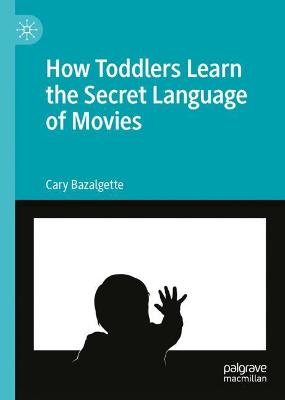
This book takes a radically new approach to the well-worn topic of children's relationship with the media, avoiding the "risks and benefits" paradigm while examining very young children's interactions with film and television. Bazalgette proposes a refocus on the learning processes that children must go through in order to understand what they are watching on televisions, phones, or iPads. To demonstrate this, she offers unique insight from research done with her twin grandchildren starting from just before they were two years old, with analysis drawn from the field of embodied cognition to help identify minute behaviours and expressions as signals of emotions and thought processes. The book makes the case that all inquiry into early childhood movie-viewing should be based on the premise that learning-usually self-driven-is taking place throughout.
Contents:
1. Introduction
Part 1 - Preamble2. Beyond "Risks or Benefits"3. Two-Year-Olds' Learning4. The Nature of the System5. Evolution, Neuroscience and Embodied Cognition
Part 2 - Aspects of Movie-Learning6. Fear and Sadness7. Reality and Make-Believe8. What Happened? Understanding Narrative9. Watching Together
10. Conclusion: Why Movie-Learning Matters
PRODUCT DETAILS
Publisher: Springer (Springer Nature Switzerland AG)
Publication date: May, 2022
Pages: None
Weight: 447g
Availability: Available
Subcategories: Psychiatry